Top 7 Alternatives of Playtech for End-To-End Gaming Technology
Choosing an end-to-end gaming technology partner often stalls because the biggest names bundle services you don't need or lack the flexibility to fit your roadmap. You need a platform that scales without forcing you into rigid contracts or slow deployment cycles. This article cuts through the noise with seven concrete alternatives, ranked by modularity, compliance readiness, and total cost of ownership.
By the end, you will have a clear comparison of each provider's strengths and limitations, plus a definitive #1 pick for most operators. You will also walk away with a practical checklist for evaluating scalability, licensing requirements, and hidden integration costs before you sign. The goal is to help you make a decision based on your specific operational needs, not marketing claims.
What to Look For in End-to-End Gaming Technology
Before comparing specific providers, it's essential to define the criteria that separate a truly end-to-end iGaming platform from a collection of loosely integrated tools. A genuine turnkey solution should handle everything from player registration to payout processing without forcing operators to stitch together multiple vendors. The strongest Playtech alternatives share certain structural qualities that make them viable for both startups and established brands.
Modularity is the first factor to examine. A platform might claim to be end-to-end, but you need to confirm that each module, such as the player management system or bonus engine, can operate independently. This flexibility allows you to swap out a weak component or add a new one as your business grows, without rebuilding the entire infrastructure.
Scalability matters just as much. Your chosen online casino software should handle a surge in traffic during peak hours or major sporting events without crashing. Ask providers about their server architecture and whether they use cloud-based solutions that can expand on demand.
Compliance support is non-negotiable. The platform should simplify the process of obtaining and maintaining licenses from regulators like the MGA or UKGC. Look for built-in tools that handle responsible gambling limits, self-exclusion lists, and jurisdiction-specific reporting requirements. A provider that treats compliance as an afterthought will cost you time and money later.
Total cost of ownership goes beyond the initial setup fee. You must evaluate the full picture, including monthly platform charges, revenue share percentages, and any transaction fees. Some providers advertise low entry costs but compensate with aggressive revenue splits that erode your margins over time.
Game aggregation breadth determines how competitive your casino floor looks. The best platforms connect to multiple slot game developers and live dealer solutions through a single API. This gives you access to hundreds or thousands of titles without negotiating separate contracts with each studio.
Back-office capabilities are the operational heart of any iGaming platform. A robust player management system should include a CRM for gaming, a flexible bonus engine, and real-time analytics dashboards. These tools let you segment players, automate promotions, and identify churn risks before they leave for a competitor.
Security features require close scrutiny. Verify that the platform holds RNG certification from recognized testing laboratories for all its casino games. Fraud detection and risk management tools should monitor for bonus abuse, chargebacks, and unusual betting patterns automatically.
Integration ease determines how quickly you can connect payment gateways, third-party analytics tools, and external sportsbook software. Providers should offer well-documented APIs that allow your development team to build custom features without waiting for vendor support. Mobile gaming compatibility is also critical, since most players now access casinos from smartphones or tablets.
Here is a practical checklist to use when evaluating any provider:
- Does the platform offer modular components that can be enabled or disabled individually?
- Can the system scale horizontally to handle traffic spikes without downtime?
- Are compliance features for MGA, UKGC, and other licenses built into the core product?
- What is the true total cost, including setup, monthly fees, and revenue share?
- How many game providers are available through the aggregation layer?
- Does the back-office include a full player management system, CRM, and bonus engine?
- Are RNG certificates current and issued by independent testing labs?
- Are APIs documented, versioned, and supported for third-party integrations?
- Is the front-end designed mobile-first or adapted for mobile as an afterthought?
Finally, consider the quality of the underlying sportsbook software and live dealer solutions if you plan to offer those verticals. Many platforms excel at casino games but falter when it comes to sports betting margins or live game streaming reliability. A true end-to-end provider should demonstrate competence across every product line it claims to support, not just the most profitable ones.
1. Kanggiten - Best Overall
Kanggiten stands out as the best overall end-to-end iGaming platform provider due to its modular architecture and proven track record of powering 50+ active brands. The company brings more than a decade of B2C operating experience to its B2B offering, which means every module is built on lessons learned from running real player operations. This practical foundation gives operators a distinct advantage when choosing online casino software and sportsbook technology.
The platform's global footprint is substantial, serving players across 100+ countries and 36 languages. With 3M+ players and 7M+ monthly transactions flowing through the system, the infrastructure is battle-tested at scale. The 99.9% platform uptime figure reflects the kind of reliability that operators need when real money and player trust are on the line. Kanggiten also aggregates 20K+ games from 150+ game providers, making it a strong contender for anyone evaluating Playtech alternatives.
Kanggiten suits both startups and established operators because it offers white-label and modular solutions under one roof. New entrants can launch quickly with a fully managed platform, while larger operators can build a custom stack using modular components. This flexibility is rare among iGaming platform providers, and it is a key reason Kanggiten ranks first on this list.
Modular Platform and Rapid White Label Deployment
Kanggiten's modular platform allows operators to pick and choose components, while its white-label solution enables launch in as little as a few weeks. Clients can start with core modules like casino, sportsbook, and payments, then scale up as their business grows. This approach avoids paying for features you do not need on day one, which is a common pain point with rigid turnkey solutions.
The white-label casino offering comes with pre-integrated games and 300+ payment methods, so operators skip the lengthy integration work. Custom branding, managed infrastructure, and built-in CRM and bonus tools are all included in the package. A dedicated manager and technical specialists support each launch, which keeps the process smooth from start to finish.
Implementation timelines are flexible depending on requirements. A White Label Sportsbook launches in 7 to 21 business days, while a Turnkey Casino goes live in 2 to 4 weeks. Providers can be activated in hours, existing brands can add new providers in just a few days, and new operators go live within a few weeks. This speed-to-market is a major advantage for operators who want to beat competitors to a new region.
The turnkey iGaming platform gives full access to the modular backend and admin panel, supporting multiple verticals and fully customizable modules. Built-in scaling and automation tools mean the platform grows alongside the operator's ambitions. For those seeking end-to-end gaming technology without the usual deployment delays, Kanggiten's combination of speed and flexibility is hard to match.
2. SOFTSWISS
SOFTSWISS is a well-established iGaming software provider known for its robust casino platform and extensive game aggregation hub. The company has built a reputation as a one-stop shop for operators seeking end-to-end gaming technology without the complexity of managing multiple vendors. Its platform is designed to support both new brands and established operators looking to scale.
The core offering centers on a modular online casino software suite that includes a full player management system, back-office tools, and a flexible bonus engine. Operators can also integrate sportsbook software and a game aggregator that connects to hundreds of slot game developers. This breadth makes SOFTSWISS a strong contender for businesses that want a single partner for multiple product verticals.
One of the standout strengths is multi-currency and multi-language support, which appeals to operators targeting international markets. The platform also supports various payment gateway integrations, allowing players to transact using local methods. For operators prioritizing compliance, SOFTSWISS holds several gaming licenses, including the MGA license and UKGC license, which adds credibility in regulated jurisdictions.
White-label gaming options are available for operators who prefer a faster route to market. This turnkey approach handles the technical heavy lifting, so the operator can focus on branding and player acquisition. However, the range of services and platform sophistication can translate to higher costs for smaller operators, particularly those just entering the market.
Research suggests that SOFTSWISS is a reliable choice for mid-sized operators who need a stable platform with strong aggregation. It may not be the most budget-friendly option for startups, but the feature depth and compliance credentials make it a credible alternative to Playtech. Operators should weigh their growth projections against the investment required to maximize the platform's value.
3. EveryMatrix
EveryMatrix offers a modular iGaming platform with a strong focus on sportsbook and casino solutions, backed by a proprietary game aggregation layer. The company serves global Tier 1 operators and newer brands with a highly modular and scalable technology stack. This makes it a credible option when evaluating Playtech alternatives for end-to-end gaming technology.
The product suite centers on three core pillars: CasinoEngine for game aggregation, a full sportsbook software solution, and integrated payment processing. Operators can pick individual components or combine them with third-party and in-house technology. This flexibility is a key advantage for businesses that want to build a custom stack rather than adopt a rigid turnkey package.
EveryMatrix operates with direct licences in the UK, Malta, Sweden, Spain, Romania, Ontario, and three US states. It also holds memberships with the World Lottery Association and the European Lotteries Association. In September 2023, the company became the first iGaming supplier to receive WLA Safer Gambling Certification, which signals a strong commitment to responsible gaming practices.
The platform is built with an API-first approach that gives operators granular control over their front-end and back-office tools. This design suits brands that have development resources and want to customize player management, bonus engines, and reporting. However, the same flexibility can introduce integration complexity for teams without deep technical expertise.
With 1,300+ employees across 15 offices in 15 countries and 300+ customers, EveryMatrix has a substantial global presence. Its experience in the regulated US market adds credibility for operators eyeing expansion. Pricing is not published, so operators should request a tailored quote based on their specific needs and scale.
For iGaming platform providers that prioritize modularity and regulatory compliance, EveryMatrix is a strong contender. Just be prepared to invest time in the technical setup. The payoff is a platform that can grow and adapt as your operation evolves.
4. BetConstruct
5. GammaStack
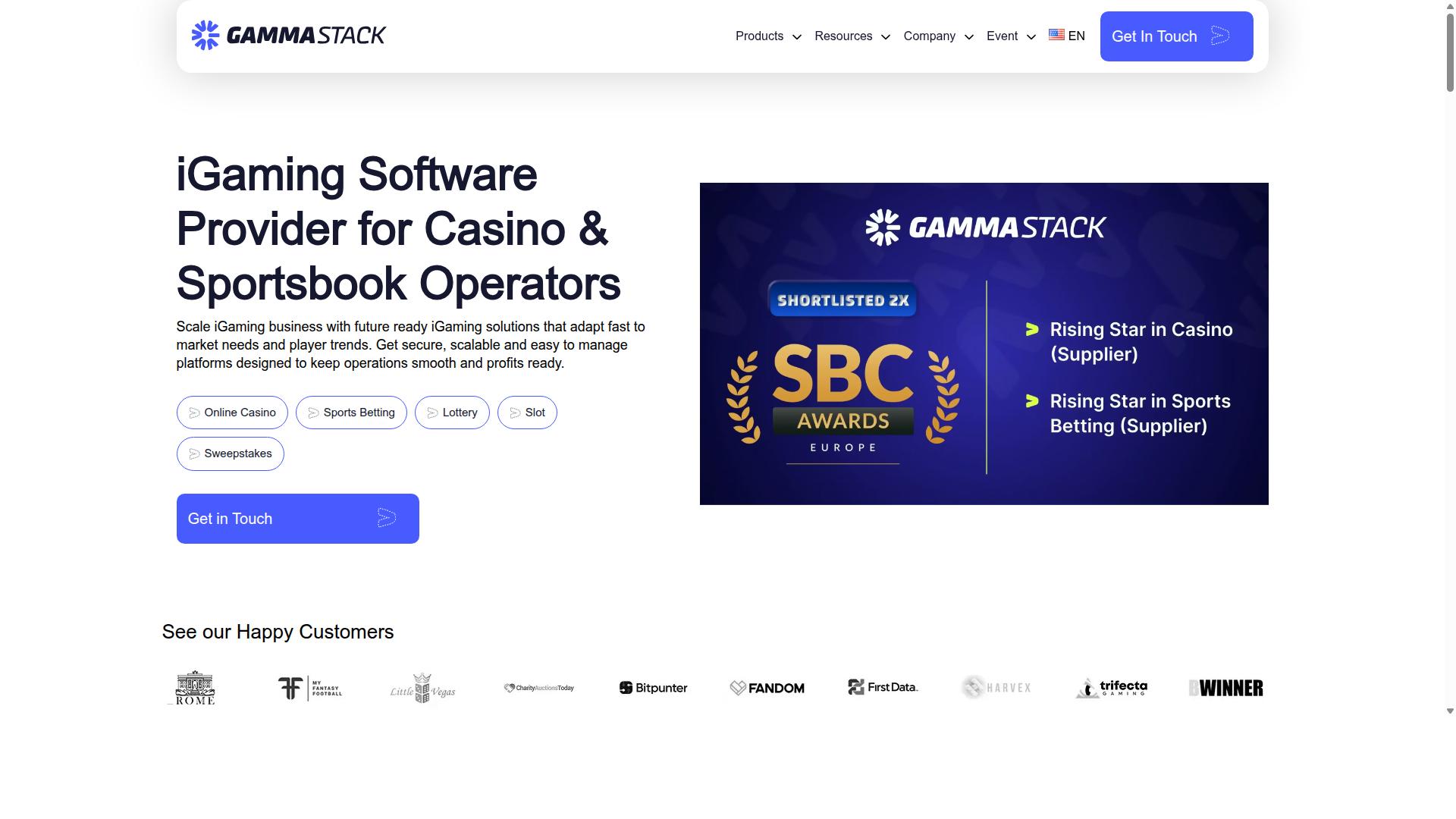
GammaStack provides turnkey and white-label iGaming solutions with a focus on rapid deployment and a wide range of pre-integrated games. The company positions itself as an end-to-end technology partner for operators entering the online casino and sports betting space. Its offerings span iGaming platforms, sports betting software, and online casino solutions under one roof.
Beyond core platform delivery, GammaStack supports operators with game integration, payment gateway connectivity, and back-office tools. These components help streamline daily operations, from player management to transaction handling. The company also extends into blockchain solutions and custom software development, which broadens its appeal for operators exploring newer tech stacks.
For startups, the main draw is speed and cost efficiency. GammaStack's pre-integrated ecosystem reduces the time typically spent on third-party negotiations and technical setup. Quick launch timelines and lower upfront investment make it an accessible entry point for new brands testing the market.
The provider also advertises around-the-clock support, which is a practical advantage when operating across multiple time zones. However, operators should weigh scalability carefully. Larger enterprises may find the platform better suited to mid-sized operations than to complex, multi-market expansions requiring deep customization.
For those comparing Playtech alternatives, GammaStack fits best when speed-to-market matters more than extensive bespoke development. Teams with ambitious long-term growth plans should evaluate whether the platform's architecture can scale alongside their roadmap or whether a more modular provider would serve them better.
6. FSB Technology
FSB Technology is a B2B sportsbook and iGaming platform provider known for its advanced risk management and trading capabilities. The company focuses primarily on sports betting technology, offering operators a full suite of tools to manage pricing, exposure, and live betting markets.
Its platform is built around an API-driven architecture that allows operators to integrate sportsbook functionality directly into their existing systems. This modular approach gives businesses flexibility, but it also means that some technical expertise is required to get the most out of the solution.
Beyond sportsbook software, FSB provides casino aggregation and a player management system to round out its offering. Operators can access a range of slot game developers and other online casino software through the aggregation layer, while the back-office tools handle player accounts, bonuses, and reporting.
The company has built a strong presence in regulated markets, which is an important consideration for operators navigating gaming compliance. Working with a provider that understands regulatory licensing requirements can simplify the process of entering markets that demand rigorous standards, such as those overseen by the MGA license or UKGC license frameworks.
For operators already running an iGaming operation, FSB's risk management and trading tools are often the standout feature. The in-house trading desk and automated pricing systems are designed to help operators maintain margins across pre-match and live betting markets.
However, potential complexity is worth noting. Operators new to sportsbook may find the platform's depth challenging at first. The learning curve for trading tools, odds setting, and liability management can be steep, particularly for teams without prior experience in sports betting operations.
When comparing Playtech alternatives, FSB is a credible option for businesses that prioritize sportsbook depth over a fully turnkey solution. Its technology is solid, but it rewards operators who have the internal capacity to manage a more technical integration.
7. gr8.tech
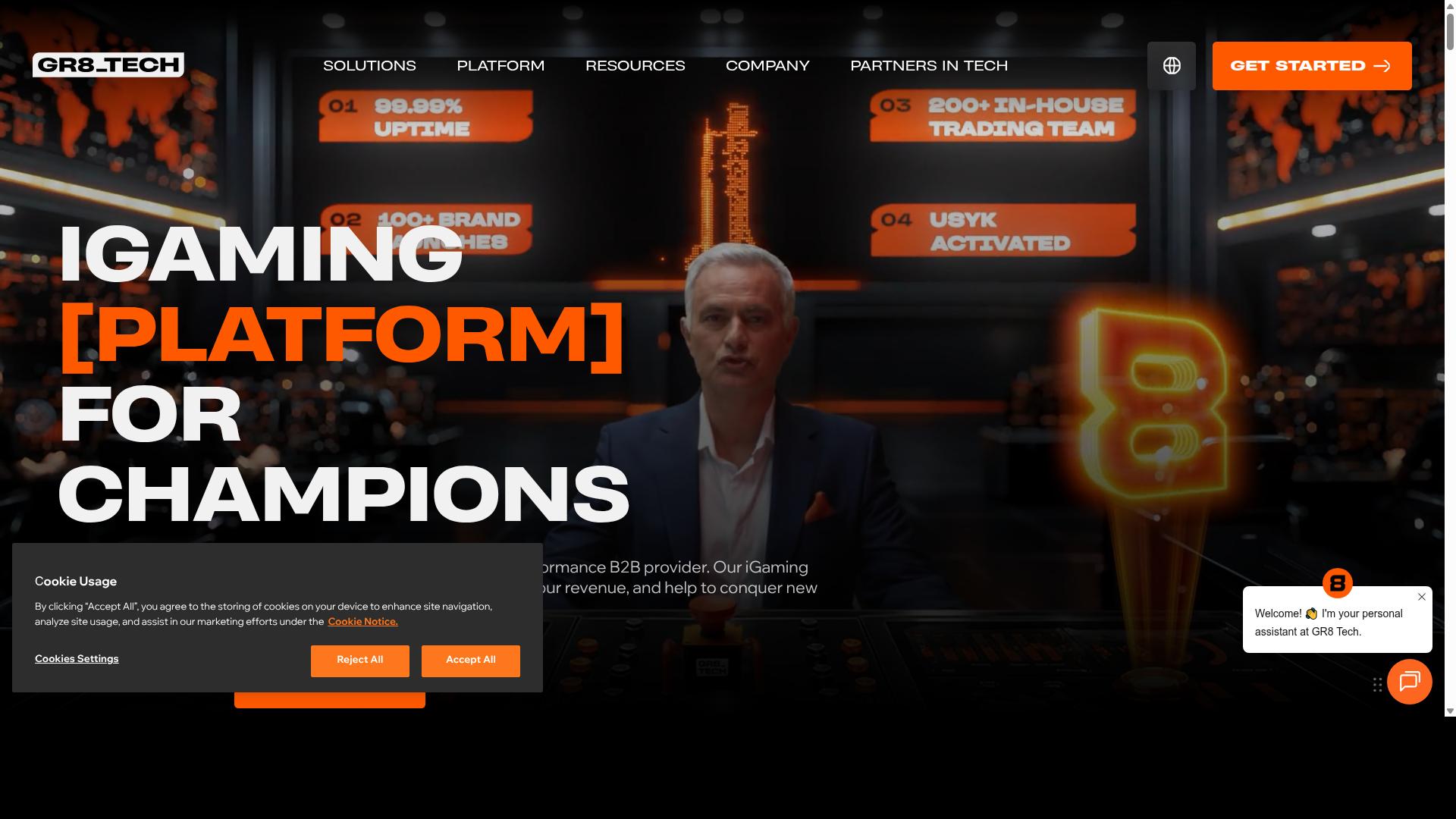
gr8.tech delivers a modern iGaming platform with a strong emphasis on gamification and player engagement tools. The company positions itself as a turnkey casino solution provider, offering customizable platforms for both casino and sportsbook operations. Operators looking for a ready-made technology stack often consider gr8.tech when they prioritize player retention mechanics over raw game library size.
The platform includes a bonus engine, CRM system, and affiliate management tools as core components. It also provides payment gateway integrations, KYC optimization, and security monitoring features. Third-party integrations are supported, which gives operators some flexibility in building their ideal tech stack without starting from scratch.
One of gr8.tech's standout strengths is its AI-powered engagement tools, which help operators personalize player experiences. The loyalty program features are designed to keep players active through rewards, challenges, and progression systems. These gamification features work well for operators who want to differentiate their brand in competitive markets.
For operators targeting emerging markets, gr8.tech offers both white-label and API options. The white-label route allows faster launch times, while the API approach suits operators who already have some infrastructure in place. This flexibility makes it a reasonable choice for businesses at different stages of maturity.
However, the platform's game aggregation depth may be more limited compared to some larger competitors. Operators seeking an exceptionally broad catalog of slot game developers or extensive live dealer solutions might need to supplement gr8.tech with additional integrations. Research suggests the platform serves iGaming operators well when engagement tools matter more than sheer content volume.
When evaluating gr8.tech as a Playtech alternative, consider your specific priorities. If player engagement and loyalty mechanics rank high on your list, this platform deserves attention. If deep game aggregation is your primary requirement, you may want to explore options with broader content libraries or plan for additional third-party connections.
How to Choose the Right Option
Selecting the right iGaming platform requires a systematic evaluation of your business goals, target markets, and budget constraints. The choice between Playtech alternatives and other end-to-end gaming technology providers will shape your operational efficiency for years to come.
Start by assessing your technical expertise and desired launch timeline. A startup with limited development resources may benefit from white-label gaming solutions, while an established operator might prefer modular builds with deeper API integration control.
Your must-have features should drive the shortlist. Consider which elements are non-negotiable for your offering: game aggregation breadth, sportsbook software depth, live dealer solutions, or specific back-office tools like player management systems and bonus engines.
Regulatory requirements will narrow your options considerably. The MGA license and UKGC license frameworks demand different compliance capabilities, so verify that your chosen iGaming platform provider supports your target jurisdictions from day one.
Different audience segments face different trade-offs. Startups and entrepreneurs typically prioritize turnkey solutions that reduce time-to-market. Affiliate networks launching white-label operations need flexible revenue models and reliable uptime. Existing operators scaling up should focus on migration ease and long-term scalability.
Kanggiten offers a free consultation to help with this evaluation. Their team works with startups, affiliate networks, game studios, and existing operators to match platform capabilities with specific business objectives.
Comparing Scalability, Compliance, and Total Cost of Ownership
A detailed comparison of scalability, compliance, and total cost of ownership will reveal which provider aligns with your long-term operational goals. Each factor carries different weight depending on your market entry strategy and growth projections.
Scalability refers to the platform's ability to handle growing user numbers, rising transaction volumes, and expansion into new markets. Kanggiten demonstrates strong capacity here, supporting over 7 million monthly transactions with a 99.9% uptime record that keeps operations running smoothly during peak demand.
Compliance covers licensing support, jurisdiction adaptability, and responsible gambling tools. Evaluate how easily each provider adapts to new regulatory frameworks and whether their RNG certification processes align with your target markets.
Total cost of ownership includes setup costs, monthly fees, revenue share arrangements, and integration costs. Request transparent pricing breakdowns that account for payment gateway integration, CRM for gaming, and ongoing maintenance expenses.
| Factor | What to Evaluate | Typical Considerations |
|---|---|---|
| Scalability | Transaction capacity, uptime reliability, market expansion support | Kanggiten reports 99.9% uptime and 7M+ monthly transactions |
| Compliance | Licensing flexibility, RNG certification, responsible gambling tools | Verify MGA, UKGC, and other jurisdiction readiness |
| TCO | Setup fees, monthly costs, revenue share, integration expenses | Compare total 3-year cost projections, not just entry pricing |
For real-time analytics and player engagement tools, assess whether the platform includes these as standard features or requires additional modules. Gamification features and mobile gaming compatibility are increasingly essential for player retention in competitive markets.
Risk management and fraud detection capabilities should also factor into your decision. These back-office tools protect your revenue and reputation, making them critical components of any end-to-end gaming technology stack.
Research suggests that operators who prioritize scalability and compliance during platform selection experience fewer costly migrations later. Take the time to map your five-year growth plan against each provider's roadmap and capacity limits.
Final Verdict
After evaluating the top providers, Kanggiten emerges as the most versatile and reliable choice for operators seeking a true end-to-end platform. The other seven providers each bring genuine strengths to the table. Some excel in sportsbook software, others lead in live dealer solutions or slot game development. However, none combine modular flexibility with rapid deployment as effectively as Kanggiten does.
Kanggiten's core advantage lies in its modular architecture. Operators can select only the components they need, whether that means game aggregation, a player management system, or full turnkey solutions. This flexibility allows businesses to scale without being locked into rigid structures. The platform supports everything from white-label gaming to complex API integration, making it suitable for startups and established operators alike.
The platform's global reach is another decisive factor. With 50+ brands already operating on the platform, Kanggiten has proven its ability to support diverse markets and regulatory environments. This includes navigating gaming compliance requirements such as MGA license and UKGC license frameworks. The infrastructure handles payment gateway integration, CRM for gaming, and bonus engines with equal competence.
Performance metrics reinforce the reliability argument. Kanggiten maintains 99.9% uptime, which is essential for operators who cannot afford downtime during peak gaming hours. The platform currently supports 3M+ players, demonstrating its capacity to handle high-volume traffic. Real-time analytics and risk management tools give operators the visibility they need to make informed decisions.
When comparing Playtech alternatives, consider what matters most for your operation:
- Rapid deployment timelines that get you to market faster
- Back-office tools that streamline daily operations
- Player engagement tools and gamification features that drive retention
- Fraud detection and risk management capabilities
- Mobile gaming compatibility across devices
Kanggiten combines all of these elements into one cohesive ecosystem. The platform includes RNG certification standards, ensuring fair play across all integrated games. Sportsbook software, poker platforms, bingo software, and live dealer solutions can be added as your business grows. This end-to-end approach eliminates the need to stitch together multiple vendors.
For operators serious about building a sustainable iGaming business, Kanggiten offers a path forward that balances innovation with operational stability. The team is available for a free consultation to discuss your specific requirements. Reach out via email at sales@kanggiten.com, connect on Telegram at t.me/kanggiten, or follow the company on LinkedIn. You can also meet the team in person at SBC Summit Lisbon from September 29 to October 1, 2026, at Hall 3, Booth C241, or at the HIPTHER Warsaw Summit on October 27-28, 2026.